Showing posts with label REVIEW. Show all posts

Wednesday, 27 July 2016

ACT OF AGGRESSION:REVIEW

                     ACT OF AGGRESSION 

                                            REVIEW


Reboot Edition brings the techno-thriller RTS game Act of Aggression to a higher level. The Reboot Edition offers a full gameplay overhaul: new resource system, playable builder units, new base buildings, simplified research system, and many major mechanic improvements for smoother and more dynamic gameplay in skirmish mode against the AI and in your multiplayer battles. Either launch the original game or Reboot Edition as you see fit, and experience the new benchmark of real-time strategy games. 

Gameplay will be familiar to anyone who has played a real-time strategy game before. Players need to harvest resources, build up their base, create an army, and wipe out the opponents' base. There are four resources to keep track of: oil, aluminum, rare earth elements, and electricity. The first three are harvestable from the map using Refineries, but electricity is created by specific buildings. There are other ways to acquire certain resources, like occupying banks or constructing specific buildings.


Another important element involves prisoners of war. After a soldier is defeated in battle, they don't disappear from the map. Instead, they become a unit that has no action other than to move. Players can have the wounded soldiers retreat to base, but if an enemy gets there first, they can capture the POW. From there the enemy can generate resources, and even be traded for different resources. This is something that can really impact the late-game, and can easily separate mediocre and great players.

This might not be the prophet of the next wave of "golden-era" RTS games, but it's a fresh entry to a genre that desperately needs it. It's one of the few games that has truly made me feel like a strategist, and changes the way I approach familiar situations when playing online. For those only interest in single-player, I'd recommend looking elsewhere. If online multiplayer or even AI skirmishes are all you need, Act of Aggression delivers a wonderful product.


                                                                                                                                                                    CLICK HERE TO SEE THE TRAILER

Sunday, 24 July 2016

35MM:REVIEW

                                     35MM REVIEW


Post-apocalyptic story about two travelers who set out on a long journey in the wasteland, left by people after the global epidemic. The disaster destroyed much of the world's population, the infrastructure went wrong and the common life remained only in memories. The times when a human has adapted the environment for himself have end and now, in order to survive, he will have to adapt to changes. You will have to play the character whose path runs through the deserted towns and cities in Russia, fields and forests of a vast country and even a secret underground facility. Who are we, where are we from and where do we go – we will be lucky to know it only at the end'


When you launch the game, all the language will be displayed in Russian which will confuse many, but after guessing a few words, you can easily find the “English” language option in the settings menu. Although, it doesn’t take much finding, I found this to be slightly frustrating, but hopefully the developers will patch this soon. Once you have sorted that out, you will be greeted by the games stunning visuals as you meet your fellow traveller.'

There’s no denying that the developers have done a supremely good job of creating an atmospheric post-apocalyptic world through its stunning visuals and sound design. During my playthrough, I was very impressed with the horrifying sounds of screeching metal and my loud footsteps. The combination of high quality visuals and sound helped create tons of immersion, so much so that it made the hairs on the back of my neck remain stood up for long periods of time. When travelling in the metro, It felt reminiscent of the ‘metro’ game series, with the same level of atmospheric detail.


CLICK HERE TO SEE THE TRAILER


PROJECT CARS:REVIEW

                                        PROJECT CARS 

                                           REVIEW

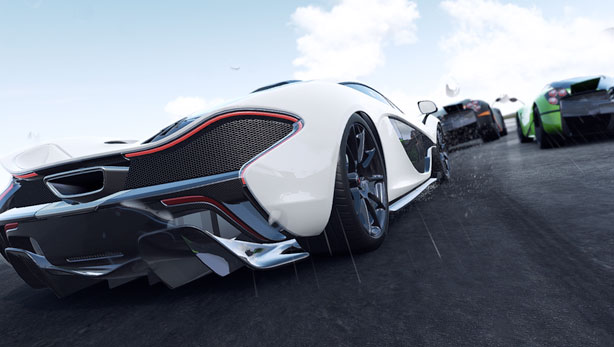
 Project CARS is a motorsport racing simulator video game developed by Slightly Mad Studios and published by Bandai Namco Games. It was released in May 2015 for Microsoft Windows, PlayStation 4, and Xbox One. Project CARS was originally also due for release on the PlayStation 3, Xbox 360, and Wii U but it was later announced that these versions had been cancelled.


 Multiplayer is similarly laissez-faire, with no real progression system to speak of. If all you’re looking for is a chance to hop in against other players, you’ll probably be satisfied, but if you’re like me, you’ll wish there were some sort of skill-based ranking or transparent standings to count on. You’ll also grow to hate the long periods you’ll spend in the lobby waiting for everyone to ready up, as well as the fact that the host can force whatever insane settings he or she wants on everyone else. I once participated in a race where every single car in the game was available, and while it was amusing to see superkarts buzzing around Formula cars and hatchbacks, I wouldn’t exactly call it competitive.
it didn’t help that the AI racers in the Career and Solo modes were so inconsistent. With the default difficulty setting, the other drivers varied between smartly aggressive and totally passive. Why should I spend an hour learning how to master the line at the Sonoma Raceway if I can win by a margin of 12 seconds even when I don’t put in time studying the track? Couple this with a nasty bug that would randomly switch me from first to last place, and the whole experience went from meditative to monotonous. (I hit that bug four times in 15 hours of play, but even that is too many

That’s Project CARS at its best. No experience points. No parts to buy. No cars to add to your collection. The audacious decision to offer everything up front informs the rest of Project CARS’s design, making it distinct (and sometimes frustrating). Other games in the genre work like Skinner boxes, offering rewards according to a special schedule designed to keep you hooked. These games offer the fantasy of plodding, constant accumulation or low-stakes (if high-speed) action. Project CARS offers a different fantasy, one that’s a little less attractive and a bit harder to enjoy: the fantasy of learning how to do something difficult.


WATCH DOGS:REVIEW

                               WATCH DOGS:REVIEW 

All it takes is the swipe of a finger. We connect with friends. We buy the latest gadgets and gear. We find out what’s happening in the world. But with that same simple swipe, we cast an increasingly expansive shadow. With each connection, we leave a digital trail that tracks our every move and milestone, our every like and dislike. And it’s not just people. Today, all major cities are networked. Urban infrastructures are monitored and controlled by complex operating systems. 


You play as Aiden Pearce, a brilliant hacker and former thug, whose criminal past led to a violent family tragedy. Now on the hunt for those who hurt your family, you'll be able to monitor and hack all who surround you by manipulating everything connected to the city’s network. Access omnipresent security cameras, download personal information to locate a target, control traffic lights and public transportation to stop the enemy…and more.


In Watch_Dogs, this system is called the Central Operating System (CTOS) – and it controls almost every piece of the city’s technology and holds key information on all of the city’s residents. 

CLICK HERE TO SEE THE TRAILER

Saturday, 23 July 2016

sleeping dogs: review

                           SLEEPING  DOGS           


  Sleeping Dogs is an open world cop drama set in the city of Hong Kong. Taking the role of undercover cop Wei Shen, players must take down one of the world's most lethal criminal organizations from the inside. Featuring imaginative combat systems, Sleeping Dogs empowers enables players to perform an array of martial arts moves, singlehandedly taking on numerous opponents. Players perform visceral kicks and combos, vicious counters and a cinematic set of environmental take downs making use of real-world items from circular saws to phone booths, incinerators to refrigerator doors


      There are shadows of Bruce Lee in Wei's fighting style as he fends off knife attacks in alleys. In gun fights he channels Chow Yun Fat, vaulting over tables and hosing down enemies in slow motion. On rooftops, he trades on Tony Leung's ability to look cool in a suit by putting on shades and standing still in front of sunsets. Sleeping Dogs occasionally delivers these moments with more style than any other member of the Mafia/GTA family, but they're folded into a humourless and predictable tale set in a Hong Kong that often feels like a beautiful backdrop rather than a bustling, interactive city.

Sunday, 7 February 2016

JUST CAUSE 3 REVIEW

                        JUST CAUSE 
                          
                            REVIEW:
                                    
Awesome explosions: Just Cause 3’s got ‘em! The story would have you believe all of this spectacular demolition is about liberating the picturesque island nation of Medici from a mustache-twirling dictator. But considering it doesn’t even care how many civilians you blow up in the process, we all know what it’s really about: ridiculous over-the-top action, physics-based comedy, and impressive destruction in a vast sandbox world. In those areas, Just Cause 3 is at the top of its game.


The map is absolutely huge (reportedly its three islands span 400 square kilometers, but I didn’t have a tape measure on me to confirm), and how you choose to get from its sunny beaches and forests to its snowy peaks is a big part of the joy of it. There’s fast travel if you’re into the whole brevity thing, plus arcadey-feeling cars, planes, boats, and more, but learning to use Rico Rodriguez's unique combination of grappling hook, parachuting, and wingsuit to gracefully zip around is the most challenging and rewarding. There’s a real skill to it, and mastering techniques such as the no-parachute, no-wingsuit Spider-Man-style swinging takes some practice.


I was driven to experiment with those methods because Square Enix’s servers are always tracking just about every move you make, popping up with alerts when you’re climbing the leaderboard in stats like longest freefall or highest parachute climb.It even pops up with a notification when someone beats your score, seeming to ask if you’re going to let that aggression stand.

It’s also routinely hilarious, because all of this acrobatic movement can easily end in Rico performing a face-first slam into the ground or a building or a tree. That always makes me smile through a cringe, anCombat shares in that violent slapstick humor because it gives you so many absurd tools that enable creative destruction. You can, of course, simply shoot guys in run-and-gun fights, but if you put in a little extra effort you can, among many other things, grapple-kick them, string them up to the nearest tall building, tie them together and conk their heads, or tie moving vehicles to the ground to create a spectacular end-over-end flip and crash. Another favorite of mine is running up to an unsuspecting soldier, slapping a sticky explosive charge literally on their face, backing away, and hitting the detonator. It’s doubly hilarious if you’ve unlocked the rocket-booster bombs, because the victim’s last few moments are spent writhing on the ground as the thruster throws them around before it explodes.
Wonky physics goofs like an enemy jeep launching through the air after a minor collision are generally a great time, especially since realism isn’t exactly the goal here so much as having crazy things happen. Rico’s also unbelievably durable to anything other than being inside a vehicle when it explodes, so having a whole building collapse on top of you is funny rather than tragic. It was only when those things didn’t work out in my favor that I was irked, such as when I had a fighter jet air-dropped to my location (you can do that once you’ve unlocked it, because Just Cause 3 is all about instant gratification) only to have it spontaneously explode before I could get in, as though it was damaged during shipping.d especially spectacular ones made me glad I had ShadowPlay running in the background.


Combat shares in that violent slapstick humor because it gives you so many absurd tools that enable creative destruction. You can, of course, simply shoot guys in run-and-gun fights, but if you put in a little extra effort you can, among many other things, grapple-kick them, string them up to the nearest tall building, tie them together and conk their heads, or tie moving vehicles to the ground to create a spectacular end-over-end flip and crash. Another favorite of mine is running up to an unsuspecting soldier, slapping a sticky explosive charge literally on their face, backing away, and hitting the detonator. It’s doubly hilarious if you’ve unlocked the rocket-booster bombs, because the victim’s last few moments are spent writhing on the ground as the thruster throws them around before it explodes.
Wonky physics goofs like an enemy jeep launching through the air after a minor collision are generally a great time, especially since realism isn’t exactly the goal here so much as having crazy things happen. Rico’s also unbelievably durable to anything other than being inside a vehicle when it explodes, so having a whole building collapse on top of you is funny rather than tragic. It was only when those things didn’t work out in my favor that I was irked, such as when I had a fighter jet air-dropped to my location (you can do that once you’ve unlocked it, because Just Cause 3 is all about instant gratification) only to have it spontaneously explode before I could get in, as though it was damaged during shipping.


Blowing things up is what Just Cause 3 does best. Though not everything in this world is destructible (typical buildings are impervious to damage, for example) enough that Just Cause 3 has some of the best and most empowering explosions this side of Red Faction: Guerrilla. Your main targets are exploding stuff like fuel tanks and power generators, which are clearly marked in red and scattered liberally around most towns and military bases, but you can also collapse flimsy-looking structures like guard towers, gas stations, and, even more spectacularly, huge bridges. Combined with a good number of extremely potent weapons, ranging from machine guns and grenade launchers to an airstrike-targeting laser and a shoulder-mounted nuke, you can rain destruction down on everything in your path even while floating on your parachute. And of course, you can hijack virtually any enemy vehicle to obtain infinite ammunition. It’s a recipe for great moments.


Enemies bolster the illusion of being an over-the-top action hero by being as dumb as bags of rocks. They’re slow to react, usually terrible shots, and will often drive their vehicles into each other or over cliffs. That works out, because there are a ton of them and they spawn out of nowhere, so even with Rico’s ridiculous durability and recharging health, you can still get overwhelmed if you don't recognize when it's time to retreat. Also, a shout-out to the one advanced soldier who pulls some action-hero moves of his own, spinning around to dodge you John Woo-style as he fires pistols from both hands.

Just Cause 3’s main problem, which arises from its absolutely massive map, is that liberating the many towns, bases, and outposts across dozens of provinces on Medici’s three large islands becomes repetitive. You blow up everything with red on it, take over the police station, maybe kill a few specific enemies, knock over a statue of the dictator, then raise the Rebel flag, and you’re done. Most liberated villages reveal uninteresting challenges like race courses for cars, boats, and planes, and those in turn unlock some hit-or-miss new abilities for Rico. Then you do it again, and again, and again, sometimes as forced padding between story missions.
Military bases are more fun to take over, since many of them feel more custom-built and unique - they include locations like naval bases, air strips, military depots, army-controlled mines, and sometimes include heavy defenses. Plus, they’ll throw a lot more heavy military hardware at you, which gives you the opportunity to hijack powerful tanks, helicopters, and jets. They’ll also usually unlock more interesting challenges, such as rounding up precious ore stones using an oversized magnet you tow around or driving a car loaded with explosives into a cluster of enemies.


GRAND THEFT AUTO: VICE CITY REVIEW

      GRAND THEFT AUTO : VICE CITY 
                                 REVIEW:
                                           

Discounting Grand Theft Auto 3, there's no other game that offers anything like the experience you'll have with Grand Theft Auto: Vice City. The game of fast cars and ruthless criminals packs more action and excitement into the first few hours than can be found in the entirety of most games. Released almost a full year after the previous version (and right during E3 -- thanks, Rockstar), there are a number of compelling, albeit minor, changes to the model that captivated us so much last year. I played through a lot of the game on the PS2 and have been hard at work this past week playing through it once again on the PC.

For those of you who've already experienced the joys of the previous game on the PC or PS2, let me spell out the major differences and improvements in store for Vice City. The story is much stronger this time around with a fully-fleshed out protagonist. The missions themselves are often longer and sometimes involve more kinds of gameplay than before. Buildings play a bigger role as well as the game permits players not only to enter structures but also buy them, opening up a new range of missions and rewards. Add to that more weapons, vehicles and a host of other surprises and you'll see that Vice City raises the bar for the series. The only downside is that the overall design of the game doesn't have the same impact that the previous game did. Hey, if it ain't broke...

If you've played Vice City on the PS2 there are fewer surprises in store. The two games are wholly identical in terms of content (making things a bit easier on our strategy guide guys). All the missions, bonuses and characters are completely identical to those in the console version. But the PC version benefits from better graphics, a slight tweak in the controls, a custom MP3-driven radio station and a customizable character skin.

If you've never played either game on any system, you're in for a real treat. Vice City tells a much tighter, more personal story that GTA3. While the anonymous nature of the character in the previous game made it a bit easier to loose yourself in the role, the main character in Vice City is tied to the overall narrative much more tightly. The story plays out in a series of cutscenes that set up the action of each individual mission.

The game takes place in the 1980s, before the events in GTA3. You play as Tommy Vercetti, a gangster who's just finished a 15-year stint in prison. Once he's out his bosses send him down to Florida's Vice City as the point man for some new operations. Once there Tommy teams up with a shifty lawyer (think Fredo) and the two begin plans for a big drug score. Once the drugs and the money disappear, Tommy finds himself fighting to discover who's cheated him while fending off the existing criminal elements of Vice City. As you might imagine, this type of scenario does involve a fair bit of violence. What you might not expect is how the game can walk a line between humor and horror while presenting all this material.

Vice City itself is a fully developed island town that lives and breathes like few other game settings before it. Cars drive up and down the streets, boats ply the water ways, news copters zip by overhead and everywhere you turn the citizens of Vice City are going about their business. The crooks, cops and citizens of the city are all capable of a level of dynamic behaviors. But even if you're not shooting at them, they still have agendas. You'll see rival gangs fighting each other in the streets and traffic accidents escalating in to fist fights.

And while you'll spend plenty of time walking amongst these encounters, the real heart of the game is stealing cars and driving from crime to crime. The list of cars available in the game is far too long for us to examine each of them in turn but some general comments should give you a good impression of what to expect. You'll find lots of small sporty cars and lots of large family sedans and wagons with plenty of gradations in between. Large delivery vans, city buses and trucks give you a slower but more damage-resistant ride. It's just what you got in GTA3, there's just more of it this time around.

Although it's not new for the series, I should probably say a few words about the rules of the road at this point. Rockstar's struck a great balance between offering you consequences for your actions and letting you run around without worrying about the real rules of the road. Cops aren't too worried about speeding, running red lights or even causing crashes. This keeps the pace of the game high and also ensures that, when you really do do something to cheese off the cops, it becomes a dynamic part of the game rather than an inconvenience. The pace of the game is also helped in that crashes aren't as catastrophic as they might be in real life; you can take a few hits and keep on going.